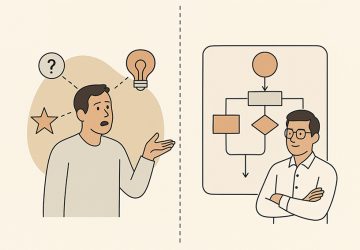
In the world of software development, we often encounter programmers who complain about the constant changes demanded by clients or product managers. They usually believe that code should be written once and never touched again. But is this a realistic mindset? Clearly not.
Why is software called “soft”?
The products we create are called software, and this name was chosen for a reason. Unlike hardware, software must constantly adapt and change. If software weren’t supposed to evolve, we could’ve just called it hardware too.
The reality is that the requirements of a software project are never fixed. Changes in the market, users, competitors, and technology are constantly shaping new needs. Therefore, software that cannot adapt to these changes is essentially dead.
The solution: Clean Architecture + Clean Code
To respond effectively to change, we need two key things:
- Clean Architecture
- Clean Code
1. Architecture: Engineering the structure of software
Architecture means structure. Just as a house is built with defined walls, roofs, and columns, software too must have a structure. But unlike a house, the building blocks of software aren’t bricks or cement—they’re smaller software components.
Large software systems are composed of smaller modules and services. If these components aren’t well-defined, independent, and flexible, a change in one area can cascade and damage others like dominoes.
Clean Architecture means creating layers with controlled dependencies.
It means understanding what should know about what and what must remain unaware of what.
Key principles of Clean Architecture:
- Dependencies should point inward, not outward
- Details (like frameworks or databases) are replaceable; core logic isn’t
- Layers should be arranged by levels of abstraction, not technology
2. Clean Code: Engineering the details
Even if you have the best architectural blueprint, if you place bricks carelessly, you’ll end up with an ugly, unsafe, and uninhabitable house. The same applies to software.
Code with bad naming, too much repetition, long functions, or tangled dependencies won’t be maintainable, even if it lives within a great architecture.
Clean Code is code that is readable, changeable, and testable.
Books like Clean Code and Clean Architecture by Robert C. Martin (Uncle Bob) are essential resources. They help us understand:
- How to tell if code or architecture is clean or messy
- What metrics define good software structure
- How to build software that stays alive and maintainable long-term
🔗 Further reading: [The Clean Architecture by Uncle Bob]
Programming is not typing code—it’s engineering code
Is programming just typing code? No! Programming is engineering—making decisions about structure, dependencies, design patterns, SOLID principles, testability, and maintainability.
Unfortunately, in many companies, developers are constantly coding without thinking about architecture, design, or engineering principles. The result? Code that works, but can’t be changed. Software that runs, but no one dares to touch!
If we take clean architecture and clean code seriously:
- Development becomes faster
- Changes become cheaper
- Team experience becomes more enjoyable
- Software lives longer
Conclusion
Clean Architecture is a way to combat complexity, change, and chaos in software. It helps us build systems that grow with change—not collapse under it.
So if you want to truly enjoy your job, build software like a well-designed city: beautiful, organized, scalable, and future-ready.