The concept of User Experience (UX) has gained considerable prominence in the fields of technology, design, and product development in recent years. However, a common misconception persists: that UX is a purely technical or specialized topic, relevant only to designers, developers, or product managers. The reality is quite the opposite—UX is a universal concern, interwoven with our daily lives, regardless of our profession or expertise.
What is User Experience?
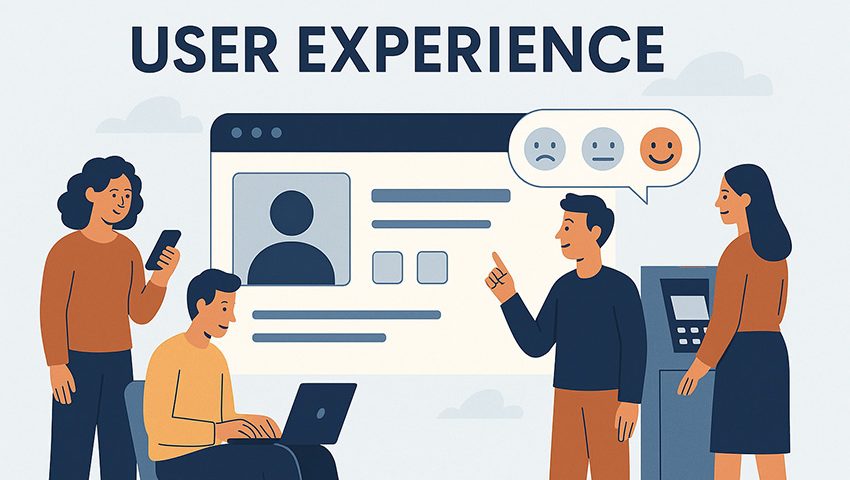
At its core, user experience refers to the sum of emotions, perceptions, and reactions an individual has while interacting with a system, service, or product. This could be a complex software application, a self-service kiosk, or even a simple restaurant menu.
The goal of UX is to make interactions smoother, more intuitive, and more human-centered.
Beyond Specialization: UX in Everyday Life
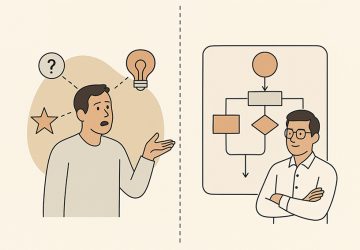
One of the most persistent myths about UX is that it belongs solely to the domain of technical experts. In truth, every individual, in some capacity, designs experiences for others—whether consciously or not.
- A teacher who adapts their explanation to better match the comprehension level of students.
- An employee who simplifies a process to make it easier for customers to navigate.
- A doctor who communicates treatment plans clearly and empathetically.
- Even a family member who organizes a gathering in a more inclusive and enjoyable way.
All of these people are, in essence, designing or improving experiences. This is where UX transcends its technical roots and becomes a social and human concern.
UX as a Mindset
UX is not merely a set of tools or techniques. It is, above all, a way of thinking—one rooted in empathy, clarity, and human-centric design.
User experience places the individual at the center, striving to turn every interaction—whether digital or physical—into something meaningful, seamless, and satisfying.
When we bring this mindset into our personal and professional lives—whether designing a system or leading a meeting—we contribute to the overall quality of life for others. That is the true power of UX.
The Impact of User Experience on Economic Dynamics
User experience not only influences individual satisfaction and comfort but can also act as a driving force for economic growth and a country’s competitiveness. In today’s world, the global economy is built on innovation, the speed of service delivery, and customer satisfaction. A product or service that offers a better user experience has a higher chance of attracting and retaining customers, expanding its market, and increasing revenue.
The Chain Effect of User Experience on the Economy and Quality of Life
Improving user experience can trigger a positive chain reaction that starts at the individual level and extends to the national scale:
- User satisfaction and trust → A product or service with better UX delights users and fosters loyalty.
- Increased demand and market share → User satisfaction leads to attracting new customers and growing sales.
- Business growth and job creation → Successful businesses create more job opportunities and inject more capital into the economy.
- Boost in innovation and healthy competition → The demand for better UX pushes companies toward innovation and more effective competition.
- Strengthening the national economy → Export growth, foreign investment, and greater financial circulation enhance a country’s economic power.
- Improved quality of life → Higher incomes, better public services, and more efficient technologies make daily life easier and more satisfying for citizens.
Thus, user experience is no longer merely a concern for design or technology; it serves as a key driver of economic and social transformation.
📎 At the end of this article, I’ve shared a PowerPoint file I presented in my previous company. It dives deeper into the practical dimensions of user experience: