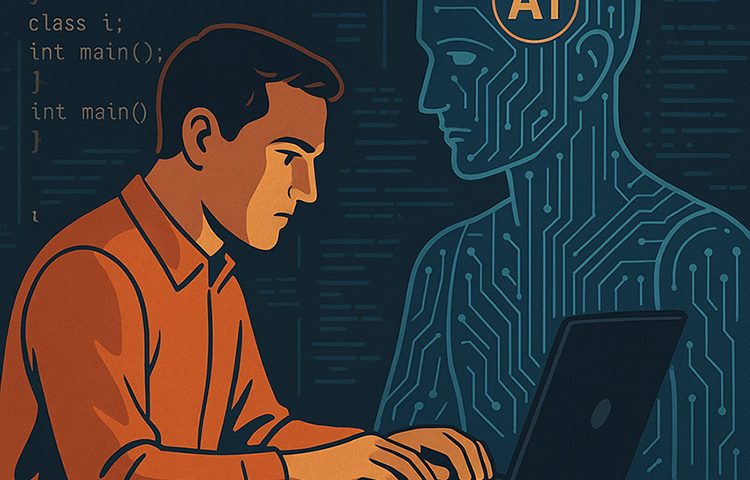
Rethinking What It Means to Be a “Programmer” When AI Writes Code
AI is no longer just a tool; it’s a partner.
For some time now, we haven’t been thinking with computers—we’ve been thinking inside them.
The code that once reflected the human mind is now written by algorithms trained on millions of human thoughts. And so, a deeper question arises:
If machines can write code, what exactly is our role?
1. Programming Has Never Been About Code
Anyone who has worked in technology knows this: programming was never merely about writing code.
Code is just a language—the language of systematic thinking, problem solving, and modeling reality.
At best, AI is a skillful writer in that language. But it’s a writer that doesn’t understand why it writes what it does.
When we ask ChatGPT or Copilot to build an app, they generate code based on statistical patterns, not human purpose.
The result? A product that works—but may not be right.
Something functional, but often soulless.
2. Companies Don’t Want to Eliminate Programmers—They Want to Make Them Unnecessary
To understand corporate behavior, speak the language of economics, not technology.
Every wave of automation has had one goal: to reduce the cost of human decision-making.
But in software, that’s tricky.
When a machine decides what to write and why, who takes responsibility for the result?
If an AI’s error leads to a data breach or billion-dollar loss, who’s accountable?
That’s why companies still need a “human in the loop”—someone who bears ethical, legal, and design responsibility.
Put simply:
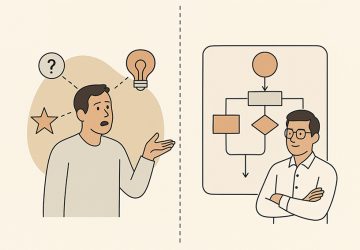
Managers don’t want to remove programmers;
they want to turn them from executors into supervisors.
3. The Future Belongs to Those Who Can Ask the Right Questions
In a world where machines can generate technical answers in seconds,
human value lies in asking the right questions.
The programming of the future will likely blend natural language, logic, and systems thinking.
Winners will be those who know:
- What problem actually needs solving?
- Which parts should be left to AI?
- And which decisions must remain human?
Learning to program today means learning the architecture of digital thought—
learning how to communicate precisely with machines, not just mastering Python or JavaScript.
4. If You Only Use AI, It’s Actually Using You
The difference between programming and automated code generation
is the difference between understanding and repetition.
AI tools are brilliant—so long as you understand why their answers work.
But if you simply issue commands and accept outputs,
you’re no longer an engineer—you’re an operator on the software assembly line.
The companies that get the most out of AI are those where human understanding of systems still exists—
where humans act as critics, not mere consumers of model outputs.
5. The Programming of the Future Is the Design of Human–Machine Interaction
In the next decade, programmers will deal less with syntax and more with meaning.
They will need to design the bridge between human minds and machine logic—
like linguists standing at the border of two cultures.
Programming is shifting toward designing conversations with machines,
not just writing instructions for them.
This means programming is not dying;
it’s becoming one of the most human-centered skills of the century.
6. Conclusion: We Must Learn Programming—But Not to Write Code
We must learn programming in order to:
- Understand the structure of the digital world,
- Communicate intelligently with machines,
- And take responsibility for the decisions they make.
Those who learn to code to compete with machines will lose.
Those who learn to code to understand machines will shape the future.
One day, AI may write all the world’s code—
but no machine can yet understand why a human decided to write it.
If we use AI as an excuse to stop learning, we’re deleting ourselves from the future.
AI is a powerful tool—but for those without knowledge, that power is meaningless.
Refusing to learn, hoping AI will do everything for us, is not progress—
it’s digital laziness.