
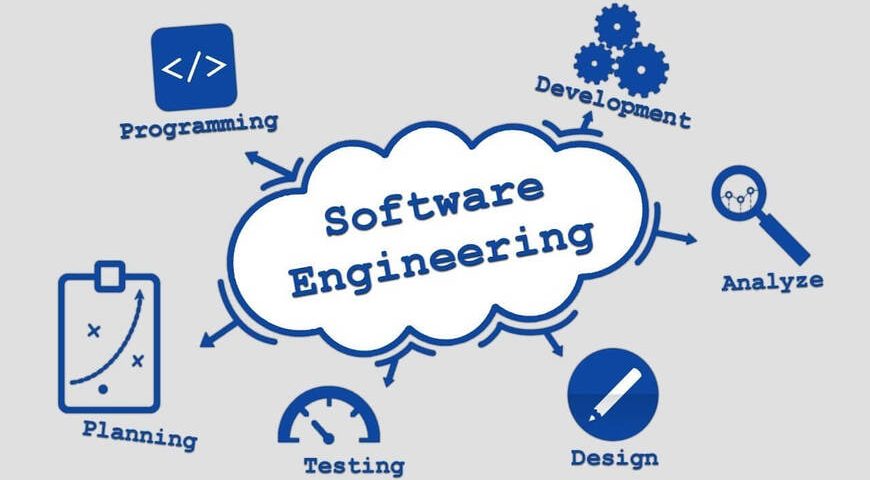
Software engineering in large projects is no longer limited to code quality or clean design. When it comes to distributed systems, scalable architectures, and development in multicultural, multi-timezone environments, traditional skills and patterns are not enough. In this article, we will examine advanced challenges in software engineering and practical examples for addressing them.
1. Distributed Architectures
With the growth of cloud services and microservices-based architectures, designing distributed systems has become a key skill. These systems have specific challenges:
- CAP Theorem: You cannot guarantee Consistency, Availability, and Partition Tolerance at the same time.
🔹 Example: In MongoDB’s Replica Set mode, Availability and Partition Tolerance are usually prioritized, even if immediate Consistency is sacrificed. - Eventual Consistency: In scalable systems, eventual consistency is acceptable.
🔹 Example: In Amazon DynamoDB, data is not immediately synchronized across all replicas, but will eventually become consistent. - Consensus Algorithms: Algorithms such as Paxos or Raft are used for coordination between nodes.
🔹 Example: etcd, which Kubernetes uses to store configurations, implements the Raft algorithm.
2. Event-Driven Architecture
In reactive systems, event-driven architecture enables high scalability and responsiveness.
- Event Sourcing: Changes are stored as events, not as the current state.
🔹 Example: In Axon Framework for Java, a banking system stores a list of transactions instead of just the final account balance. - CQRS (Command Query Responsibility Segregation): Read and write operations are separated.
🔹 Example: In an online store, the “order placement” service uses a dedicated database, while the “inventory reporting” service uses a query-optimized database.
3. Scalability
Two main types of scalability exist:
- Vertical Scaling: Upgrading server hardware. Fast but limited.
- Horizontal Scaling: Adding new nodes. Common in cloud systems.
🔹 Examples:
- Netflix uses thousands of servers on AWS to distribute global traffic.
- NGINX or HAProxy act as load balancers to distribute traffic across servers.
- Redis is used as a cache layer for user sessions and heavy queries.
- Instagram shards its MySQL databases to support millions of users.
4. Performance Optimization
- Profiling: Identifying bottlenecks using tools like cProfile in Python or gprof in C++.
- Memory Management: Using memory pools for efficient object management.
- Asynchronous Programming: Improving I/O-bound systems with async/await.
🔹 Examples:
- Unreal Engine uses memory pools to manage meshes.
- In Node.js, async/await allows handling thousands of concurrent HTTP requests without blocking the event loop.
5. Security at Scale
In large systems, security is critical and should be designed with Zero Trust principles.
- Rate Limiting: Preventing DoS attacks.
🔹 Example: In Express.js, middleware such as express-rate-limit controls the number of requests. - Encryption at Rest and in Transit: Encrypting data during storage and transfer.
🔹 Example: In PostgreSQL, data can be encrypted at the column level using keys. - Auditing and Monitoring: Continuous monitoring of system behavior.
🔹 Example: ELK Stack (Elasticsearch, Logstash, Kibana) and Datadog are used to detect suspicious activity.
6. Scalable Testing
In large projects, unit testing is not enough. A wide range of tests is required:
- Stress Tests: Checking stability under heavy load.
🔹 Example: Apache JMeter or k6 simulate thousands of concurrent requests. - Chaos Testing: Simulating random failures.
🔹 Example: Netflix’s Chaos Monkey randomly shuts down servers. - Contract Tests: Ensuring correct communication between services.
🔹 Example: Pact is used for API testing between microservices.
Conclusion: Software Engineering at Scale is the Art of Balance
Large-scale software engineering is a balancing act: between performance and scalability, security and availability, simplicity and efficiency. This journey requires deep knowledge, the right tools, and a strong team.
If you want to work at this level, learning is just the beginning. You must be ready for experimentation, failure, and continuous improvement.





1 Comment
This article perfectly captures the complexity of modern software engineering! The discussion on CAP theorem and eventual consistency is spot on. I’ve personally faced these challenges while working with distributed databases.